
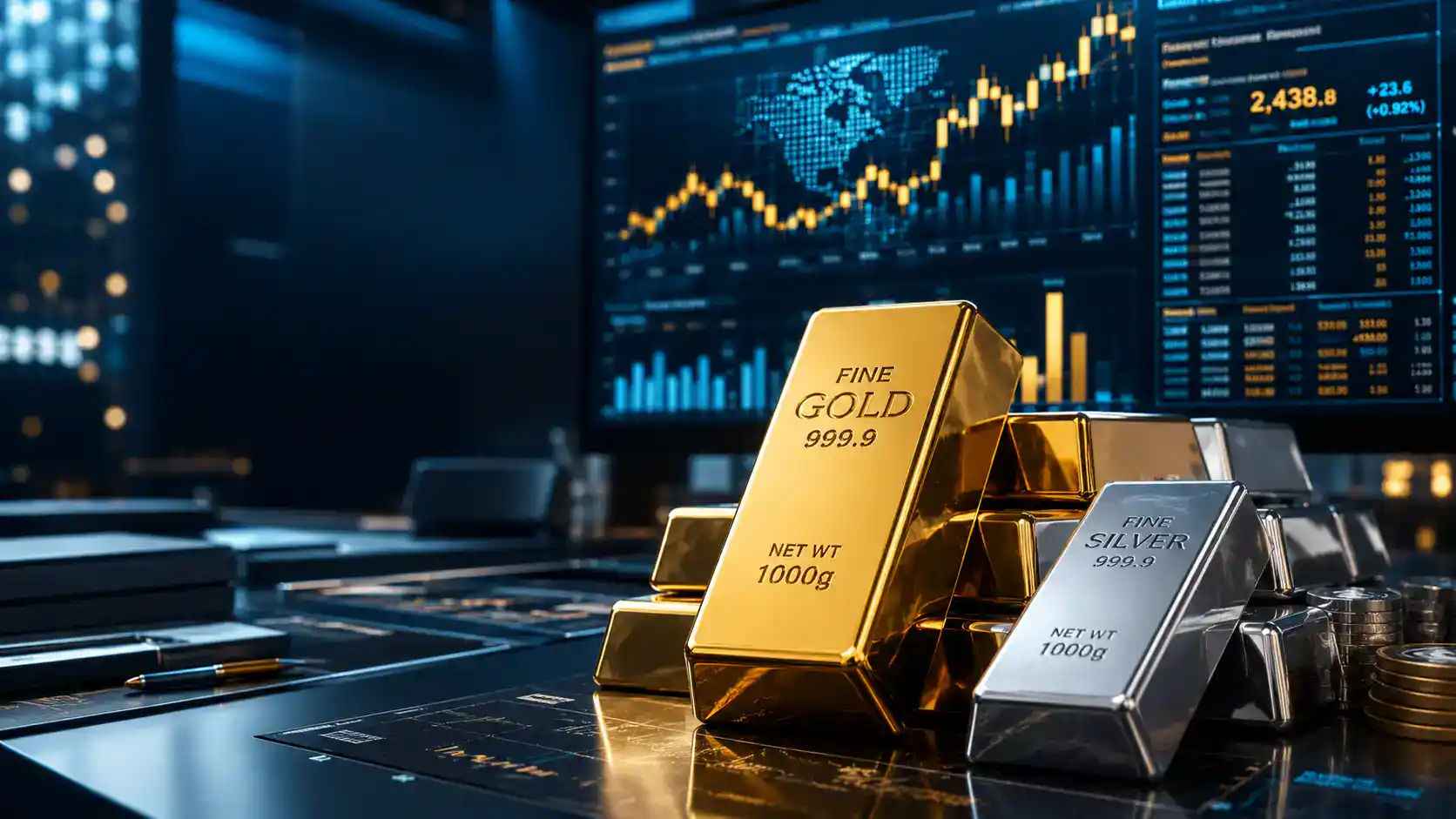
Complete guide on gold prices and silver prices including investment strategies, risks, taxation, comparison, future outlook, and portfolio planning for investors.
Gold Prices and Silver Prices Today: Complete Investor Guide
Quick Answer
Gold prices and silver prices are influenced by inflation, interest rates, currency movements, industrial demand, geopolitical risk, and global liquidity conditions. Gold is primarily used as a safe-haven asset for wealth protection, while silver combines investment demand with strong industrial usage in electronics, solar energy, and manufacturing. Together, they help investors diversify risk, protect purchasing power, and stabilize long-term portfolios during economic uncertainty.
Key Takeaways
- Gold is a long-term wealth preservation asset
- Silver is a hybrid industrial + investment asset
- Both react to global macroeconomic conditions
- Gold is more stable, silver is more volatile
- Both are widely used for portfolio diversification
- Neither produces income like dividends or interest
Overview Summary
Gold and silver are globally recognized precious metals used for investment, industrial, and financial purposes. Gold acts as a financial safe haven during inflation and crises, while silver has strong demand from industrial sectors like solar energy and electronics. Investors use both assets to hedge inflation risk, reduce portfolio volatility, and maintain long-term purchasing power.
Featured
What are Gold Prices and Silver Prices?
Gold and silver prices refer to the market value of precious metals determined by global supply-demand dynamics, inflation, currency exchange rates, interest rates, and investor sentiment.
How do Gold and Silver Prices Work?
Prices are determined in global commodity markets where traders, central banks, and institutions buy and sell based on economic conditions, geopolitical events, and industrial demand.
Are Gold and Silver Good Investments?
Yes, they are widely used for diversification and inflation protection. Gold offers stability, while silver provides higher growth potential but with greater volatility.
What Are Gold Prices and Silver Prices?
Gold and silver prices represent the global valuation of precious metals traded in international commodity exchanges and domestic markets.
In India, pricing depends on:
- Global bullion rates
- USD to INR exchange rate
- Import duties and customs costs
- GST on physical purchase
- Domestic demand cycles
- Industrial consumption trends
Gold is primarily used for wealth storage, while silver has dual usage in investment and industry.
Why Gold and Silver Matter in Modern Economy
Gold Role
Gold acts as:
- Wealth preservation asset
- Central bank reserve asset
- Inflation hedge
- Crisis protection instrument
Gold has historically maintained value during financial crises and currency devaluation.
Silver Role
Silver acts as:
- Industrial metal
- Investment asset
- Renewable energy component
- Electronics manufacturing input
Silver demand is strongly linked to industrial growth cycles.
Factors Affecting Gold Prices
Inflation Impact
When inflation rises, currency purchasing power falls, increasing demand for gold as a store of value.
Interest Rates
Higher interest rates reduce gold demand, while lower rates support it.
Currency Strength
A weaker US dollar increases global gold prices.
Central Bank Demand
Central banks purchasing gold reserves increase long-term price support.
Geopolitical Risk
Wars, crises, and political instability increase safe-haven buying.
Supply Constraints
Gold mining production is limited and grows slowly over time.
Factors Affecting Silver Prices
Industrial Demand
Silver is heavily used in electronics, batteries, and manufacturing.
Solar Energy Growth
Solar panels are a major driver of silver consumption.
Electric Vehicles
EV production increases silver usage in components.
Economic Cycles
Silver performs strongly during industrial expansion phases.
Investment Demand
Investors increase silver buying during uncertainty.
Supply Fluctuations
Silver supply depends on mining and recycling cycles.
Gold vs Silver Deep Comparison
| Factor | Gold | Silver |
| Volatility | Low | High |
| Stability | High | Medium |
| Industrial Use | Low | High |
| Growth Potential | Medium | High |
| Crisis Performance | Strong | Moderate |
| Risk Level | Lower | Higher |
| Portfolio Role | Stability | Growth + Hedge |
Gold behaves like financial insurance. Silver behaves like a growth-linked commodity.
Historical Performance Insight
Gold has consistently preserved wealth across inflationary and crisis periods. It is not designed for rapid growth but for stability and long-term protection.
Silver shows higher volatility and stronger price movements during commodity bull cycles. It can outperform gold in expansion phases but underperform in downturns.
Investment Options Explained
Gold Investment Options
- Physical gold (jewelry, coins, bars)
- Gold ETFs
- Sovereign Gold Bonds
- Digital gold platforms
Silver Investment Options
- Physical silver
- Silver ETFs
- Silver mutual funds
- Commodity trading instruments
ETFs and bonds reduce storage risk and improve liquidity.
Investment Analysis
Gold Benefits
- Stable asset
- Inflation protection
- High liquidity
- Crisis hedge
Gold Risks
- No income generation
- Opportunity cost during equity bull runs
Silver Benefits
- High growth potential
- Industrial demand support
- Affordable entry point
Silver Risks
- High volatility
- Economic sensitivity
- Price fluctuations
Portfolio Allocation Strategy
Conservative Investor
- Gold 10–15%
- Silver 2–5%
Moderate Investor
- Gold 5–10%
- Silver 2–4%
Aggressive Investor
- Gold 3–8%
- Silver 2–5%
Retiree Portfolio
- Gold 10–15%
- Silver 1–3%
Precious metals act as portfolio stabilizers rather than growth drivers.
Cost Analysis
Physical Gold Costs
- Making charges
- GST
- Storage cost
- Insurance cost
Physical Silver Costs
- GST
- Storage & handling costs
ETF Costs
- Expense ratio
- Brokerage fees
- Management charges
Cost structure significantly affects long-term returns.
Taxation Analysis (India)
Gold and silver are taxed under capital gains rules depending on holding period.
Short-term gains are taxed as per income slab.
Long-term gains may receive indexation benefits (as applicable).
ETFs and digital gold follow similar capital gains rules.
GST increases purchase cost for physical metals.
Risk Analysis
Market Risk
Gold: moderate risk
Silver: high risk
Currency Risk
Dependent on USD-INR movement
Inflation Risk
Gold performs well, silver moderate
Liquidity Risk
Low for both metals
Regulatory Risk
Low but policy changes can impact pricing
Silver carries significantly higher volatility risk.
Cost-Benefit Analysis
Gold and silver provide strong diversification and inflation protection but do not generate passive income. Their primary value lies in wealth preservation and portfolio stability rather than income creation.
Real-Life Investor Scenarios
- Beginner investors use small allocations for stability.
- Moderate investors balance equity and precious metals.
- Retirees prioritize gold for capital protection.
- Aggressive investors use small allocations as hedge instruments.
Future Outlook (2026–2030)
Gold Outlook
Supported by inflation trends, central bank buying, and global uncertainty.
Silver Outlook
Driven by solar energy growth, EV adoption, and industrial expansion.
Silver may outperform gold in growth cycles, while gold remains more stable.
Pros and Cons
Pros
- Inflation hedge
- Portfolio diversification
- High liquidity
- Crisis protection
- Global acceptance
Cons
- No income
- Volatility (silver)
- Storage costs
- Opportunity cost
- Tax impact
Myth vs Fact
- Gold does not always rise.
- Silver is not just cheaper gold.
- Precious metals are not risk-free.
- Both depend on macroeconomic cycles.
Decision Framework
- Gold is suitable for stability-focused investors.
- Silver is suitable for growth-oriented investors.
- Both combined provide balanced diversification.
Checklists
Before investing: define goals, choose product type, decide allocation.
After investing: rebalance portfolio, monitor macro trends, review annually.
FAQs
Why do gold prices change daily?
Gold prices change due to demand, inflation, interest rates, currency values, and global events.
Is silver riskier than gold?
Yes, silver prices are more volatile than gold.
How much gold should I invest in?
Typically 5–15% of your portfolio, depending on your goals.
Which is better: gold or silver?
Gold offers stability; silver offers higher growth potential but more risk.
Is digital gold safe?
Yes, if bought through a trusted and regulated platform.
Can silver outperform gold?
Yes, silver can deliver higher returns during strong market cycles.
What affects gold prices most?
Inflation, interest rates, economic uncertainty, and investor demand.
Is gold good for long-term investment?
Yes, gold helps preserve wealth and diversify investments.
What is the safest gold investment?
Physical gold, gold ETFs, and sovereign gold bonds are considered safe options.
Does inflation increase gold prices?
Often yes, as investors use gold to protect against inflation.
Why is silver volatile?
Its smaller market size and industrial demand cause larger price swings.
Should beginners invest in gold?
Yes, gold is a simple way to diversify and reduce portfolio risk.
Conclusion
Gold and silver are both valuable investment options. Gold is generally more stable and suitable for wealth preservation, while silver offers higher growth potential but comes with greater volatility. Factors such as inflation, interest rates, economic conditions, and market demand influence their prices. For most investors, especially beginners, a balanced allocation to gold can help diversify a portfolio and provide long-term financial security.
Also Read – Gold Prices Today: Complete Investment Guide, Trends, Risks & Future Outlook (2026)
- Banking Apps
- Best Deals
- Credit Cards
- Earning Apps
- Health Insurance
- Instant Loan Apps
- Jobs
- Life Insurance
- Trending Topic


